
JSON Web Token (JWT) has become one of the most popular methods for handling authentication in modern web applications. This comprehensive guide will take you through everything you need to know about JWTs, from their basic structure to implementation and security best practices.
What is JWT?
JWT stands for JSON Web Token, an open standard (RFC 7519) that defines a compact and self-contained way for securely transmitting information between parties as a JSON object. This information can be verified and trusted because it is digitally signed.
JWTs can be signed using a secret (with the HMAC algorithm) or a public/private key pair using RSA or ECDSA.
When Should You Use JWT?
Here are some scenarios where JWTs are particularly useful:
- Authorization: This is the most common use case. Once the user is logged in, each subsequent request will include the JWT, allowing the user to access routes, services, and resources that are permitted with that token.
- Information Exchange: JWTs are a good way to securely transmit information between parties. Because JWTs can be signed (for example, using public/private key pairs), you can be sure that the senders are who they say they are.
JWT Structure
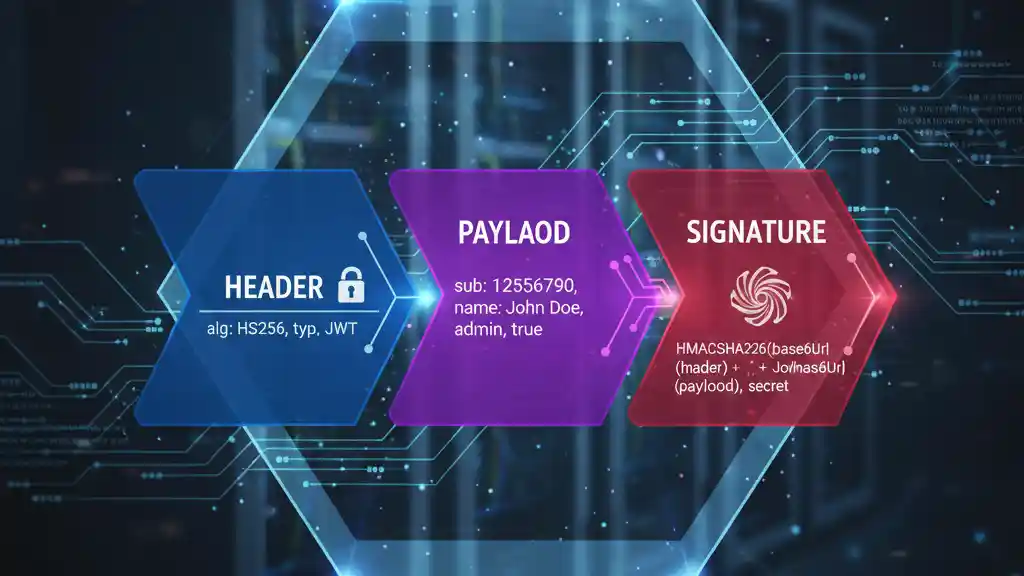
In its compact form, JSON Web Tokens consist of three parts separated by dots (.), which are:
- Header
- Payload
- Signature
Therefore, a JWT typically looks like this: xxxxx.yyyyy.zzzzz
Header
The header typically consists of two parts: the type of the token, which is JWT, and the signing algorithm being used, such as HMAC SHA256 or RSA.
{
  "alg": "HS256",
  "typ": "JWT"
}
This JSON is then Base64Url encoded to form the first part of the JWT.
Payload
The second part of the token is the payload, which contains the claims. Claims are statements about an entity (typically, the user) and additional data.
There are three types of claims:
- Registered claims: These are a set of predefined claims which are not mandatory but recommended, to provide a set of useful, interoperable claims. Some of them are:
iss(issuer),exp(expiration time),sub(subject),aud(audience), etc. - Public claims: These can be defined at will by those using JWTs.
- Private claims: These are the custom claims created to share information between parties that agree on using them.
{
  "sub": "1234567890",
  "name": "John Doe",
  "admin": true,
  "iat": 1516239022
}
The payload is then Base64Url encoded to form the second part of the JWT.
Signature
To create the signature part you have to take the encoded header, the encoded payload, a secret, the algorithm specified in the header, and sign that.
For example if you are using the HMAC SHA256 algorithm, the signature will be created in the following way:
HMACSHA256(
  base64UrlEncode(header) + "." +
  base64UrlEncode(payload),
  secret)
The signature is used to verify the message wasn't changed along the way, and, in the case of tokens signed with a private key, it can also verify that the sender of the JWT is who it says it is.
How JWT Works
In authentication, when the user successfully logs in using their credentials, a JSON Web Token will be returned. Since tokens are credentials, great care must be taken to prevent security issues. In general, you should not keep JWTs longer than required.
Whenever the user wants to access a protected route or resource, the user agent should send the JWT, typically in the Authorization header using the Bearer schema. The content of the header should look like the following:
Authorization: Bearer <token>
This can also be implemented in a cookie-based approach.
When a user is authenticated, the server generates a JWT and returns it to the client. The client stores the JWT (in localStorage, sessionStorage, or cookies) and includes it in the headers of subsequent requests. The server then verifies the JWT to authenticate the user for each request.
Implementation Example
Let's look at a practical implementation using Node.js and Express:
const jwt = require('jsonwebtoken');

// Secret key for signing JWT (in production, use environment variables)
const JWT_SECRET = process.env.JWT_SECRET || 'your-secret-key';

// Function to generate JWT
function generateToken(user) {
  const payload = {
    id: user.id,
    email: user.email,
    role: user.role,
    // Add expiration time (24 hours)
    exp: Math.floor(Date.now() / 1000) + (24 * 60 * 60)
  };

  return jwt.sign(payload, JWT_SECRET);
}

// Function to verify JWT
function verifyToken(token) {
  try {
    return jwt.verify(token, JWT_SECRET);
  } catch (error) {
    return null; // Token is invalid
  }
}

// Middleware to authenticate requests
function authenticateToken(req, res, next) {
  const authHeader = req.headers['authorization'];
  const token = authHeader && authHeader.split(' ')[1]; // Bearer TOKEN

  if (!token) {
    return res.status(401).json({ error: 'Access token required' });
  }

  const decoded = verifyToken(token);
  if (!decoded) {
    return res.status(403).json({ error: 'Invalid or expired token' });
  }

  req.user = decoded;
  next();
}

// Example route using JWT authentication
app.get('/profile', authenticateToken, (req, res) => {
  res.json({
    id: req.user.id,
    email: req.user.email,
    role: req.user.role
  });
});
Security Best Practices
JWTs, while powerful, come with their own set of security concerns that must be addressed:
1. Use Strong Signing Algorithms
- Always use strong algorithms like RS256 (RSA Signature) instead of HS256 when possible
- Never use none algorithm in production
- Keep your secret keys secure and use environment variables
2. Set Appropriate Expiration Times
- Set short expiration times to minimize the impact of stolen tokens
- Implement refresh tokens to allow users to obtain new access tokens without re-authenticating
3. Secure Storage
- Use httpOnly cookies instead of localStorage for better security against XSS
- Set the secure flag in cookies to ensure they're only sent over HTTPS
- Implement SameSite attribute to protect against CSRF attacks
4. Validate Token Claims
- Always validate the
exp(expiration) andnbf(not before) claims - Check the
iss(issuer) andaud(audience) claims to ensure tokens are meant for your application
5. Protect Against Reuse
- Implement token blacklisting for logout functionality
- Use short-lived tokens and implement refresh token rotation
Common Attacks and Prevention
1. Algorithm Confusion Attack
// Vulnerable code
const token = jwt.sign(payload, secret, { algorithm: 'none' });

// Secure approach - always specify expected algorithm
const decoded = jwt.verify(token, secret, { algorithms: ['RS256'] });
2. Weak Secret Keys
Use strong, randomly generated secrets and store them securely:
// Use a strong secret
const crypto = require('crypto');
const secret = crypto.randomBytes(64).toString('hex');
3. Token Timing Attacks
Use secure comparison functions when comparing sensitive values:
// Secure comparison to prevent timing attacks
function secureCompare(a, b) {
  return crypto.timingSafeEqual(
    Buffer.from(a, 'hex'),
    Buffer.from(b, 'hex')
  );
}
Advantages of JWT
- Stateless: No need to store session information on the server
- Self-contained: Contains all necessary information about the user
- Cross-domain: Works well with CORS and can be used across different domains
- Mobile-friendly: Small payload suitable for mobile applications
Disadvantages of JWT
- Storage: Tokens cannot be invalidated until they expire
- Size: Larger than session IDs due to containing user information
- Security: If stolen, can be used until it expires (unless blacklisted)
- No built-in refresh: Requires additional logic for token refresh
Conclusion
JWTs are a powerful tool for implementing authentication in modern web applications. They provide a stateless, secure method for transmitting information between parties. However, like any security mechanism, they require careful implementation and consideration of potential vulnerabilities.
Key takeaways:
- Always use strong signing algorithms
- Set appropriate expiration times
- Store tokens securely on the client side
- Implement proper token validation and blacklisting
- Be aware of common attacks and security pitfalls
When implemented correctly, JWTs can provide a robust authentication solution for your applications. Remember to regularly review and update your security practices as new vulnerabilities and best practices emerge in the security landscape.
The choice between JWTs and other authentication methods should be based on your specific use case, security requirements, and application architecture. For stateless, distributed systems, JWTs often provide significant advantages over traditional session-based authentication methods.